
Hot summer nights
How do you cool down if the Planet never does?

Stop me if you’ve heard this before. Crippling heat, plus an unhealthy dose of wildfire smoke, is forcing us inside — spoiling what could be a beautiful summer day.
Of course, summer is hot. That’s what makes it summer. But what we’re seeing is a warped version of it, because we keep burning fossil fuels: For example, this week’s heat wave in the Western United States was made five times more likely by climate change.
As we all retreat to our air-conditioned alcoves, we lose what could be another beautiful day outside. But we’re also losing nights of sleep inside.
A new study from Climate Central tells the story:
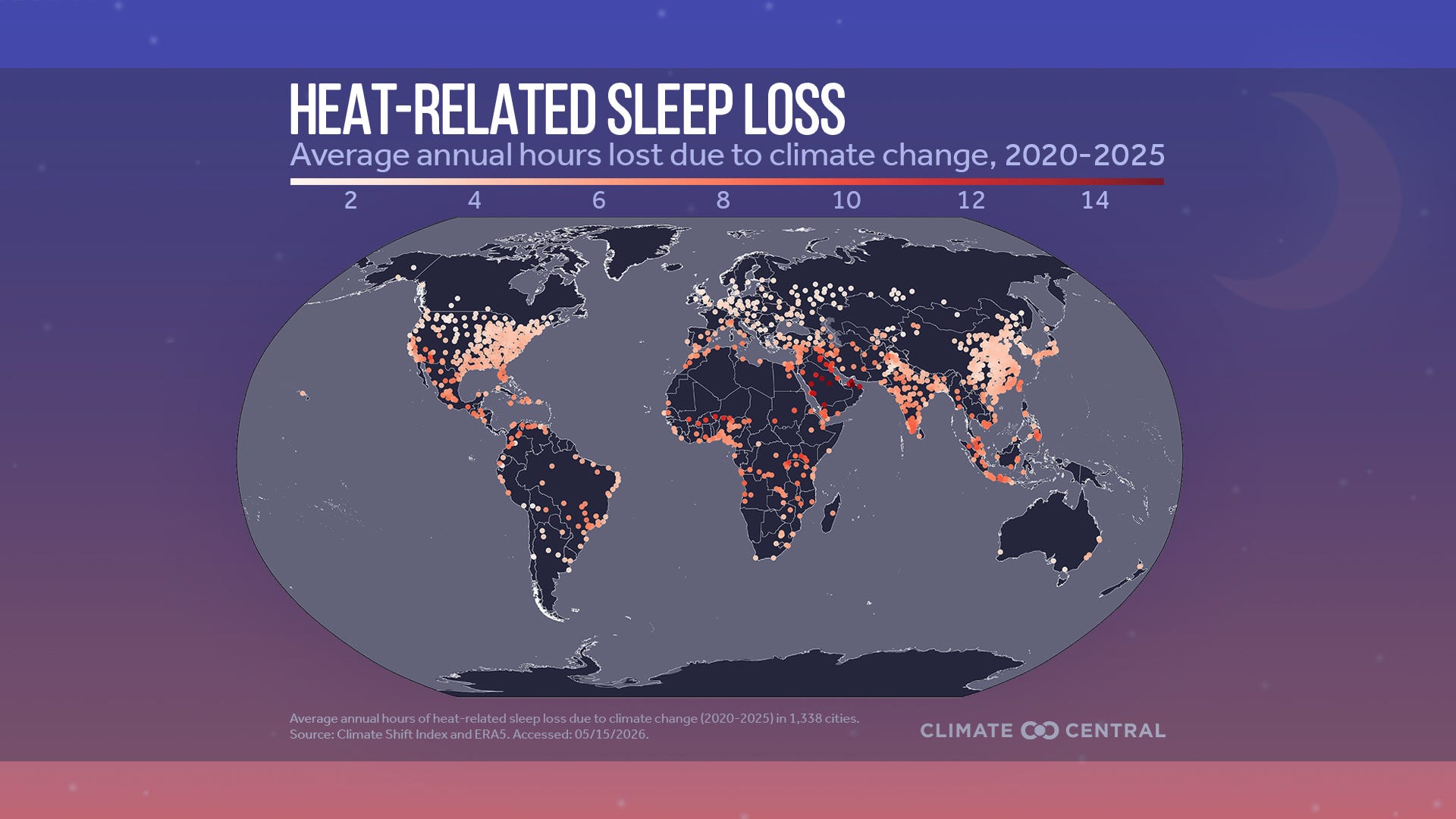
Between 2020 and 2025, higher temperatures have robbed us of nearly 56 hours of sleep/year.
In the last 50 years, sleep loss linked to climate change–fueled nights has doubled.
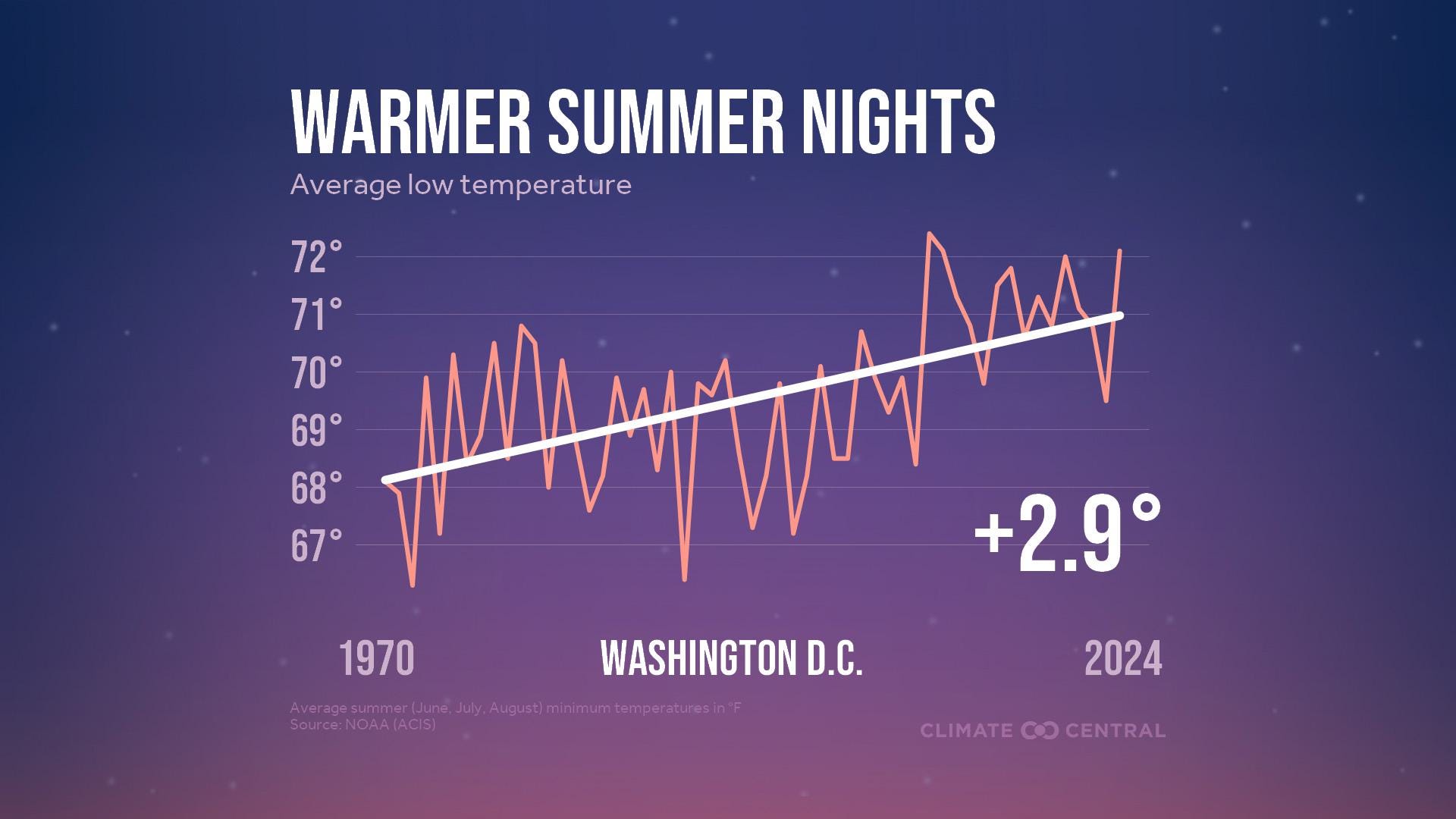
This builds on previous research from the organization: Across the U.S., summer nighttime temperatures in the last 50 years have warmed on average by 3.1°F. At our current pace of warming, we could see extremely hot summer days and nights four to eight times more often by the end of the century.
When people are literally dying from the heat, a couple nights of tossing and turning doesn’t seem too bad. But part of this newsletter is to ensure we don’t overlook the wide-ranging effects of climate change. And sleep is really important!
Though extremely hot summer days are obviously dangerous, when followed by hot nights, they’re even more so. That’s because without cooler nights, we lose another way to cool down, which could open us up to additional health risks.
Not only do hot nights make it harder for people to get much needed rest but warmer nighttime temperatures can slow cognitive function, increase the chance of workplace accidents, and hurt brain development, learning and school performance for children.
It’s even worse for vulnerable populations, including children, pregnant people, older adults, incarcerated people, unhoused people, outdoor workers, those with disabilities, and those with chronic health conditions.
One study found that the impacts of warmer nighttime temperatures are twice as large for older adults, compared with middle-aged adults, and nearly three times as large for people in lower-middle-income countries, compared with people in high-income countries.
For many Americans, the answer seems obvious. Pump the air conditioning. After all, A/C, like cooler night time temperatures, offers a reprieve from the heat of the day.
But as I’ve written several times before, A/C isn’t a silver bullet.
A/C is often tied to geography: Everyone in the U.S. and Japan may own A/C units, but globally, only 40% of the world has access to air conditioning — and that number is lower in Europe, Southeast Asia, and India.
Access to A/C is also tied to money, as many lower-income people either lack or cannot afford to run A/C. Even for those who can afford it, A/C uses a lot of energy, which strains grids at a time when energy supply is notably limited (think: data centers).
And of course, there’s pollution. Many A/C units also pump super pollutants into the air, which warms our Planet, and waste heat into the street, which warms your neighborhood.
If not A/C, then what else? Aside from ditching fossil fuels for clean energy, which should be our top priority, we do have some short-term options.
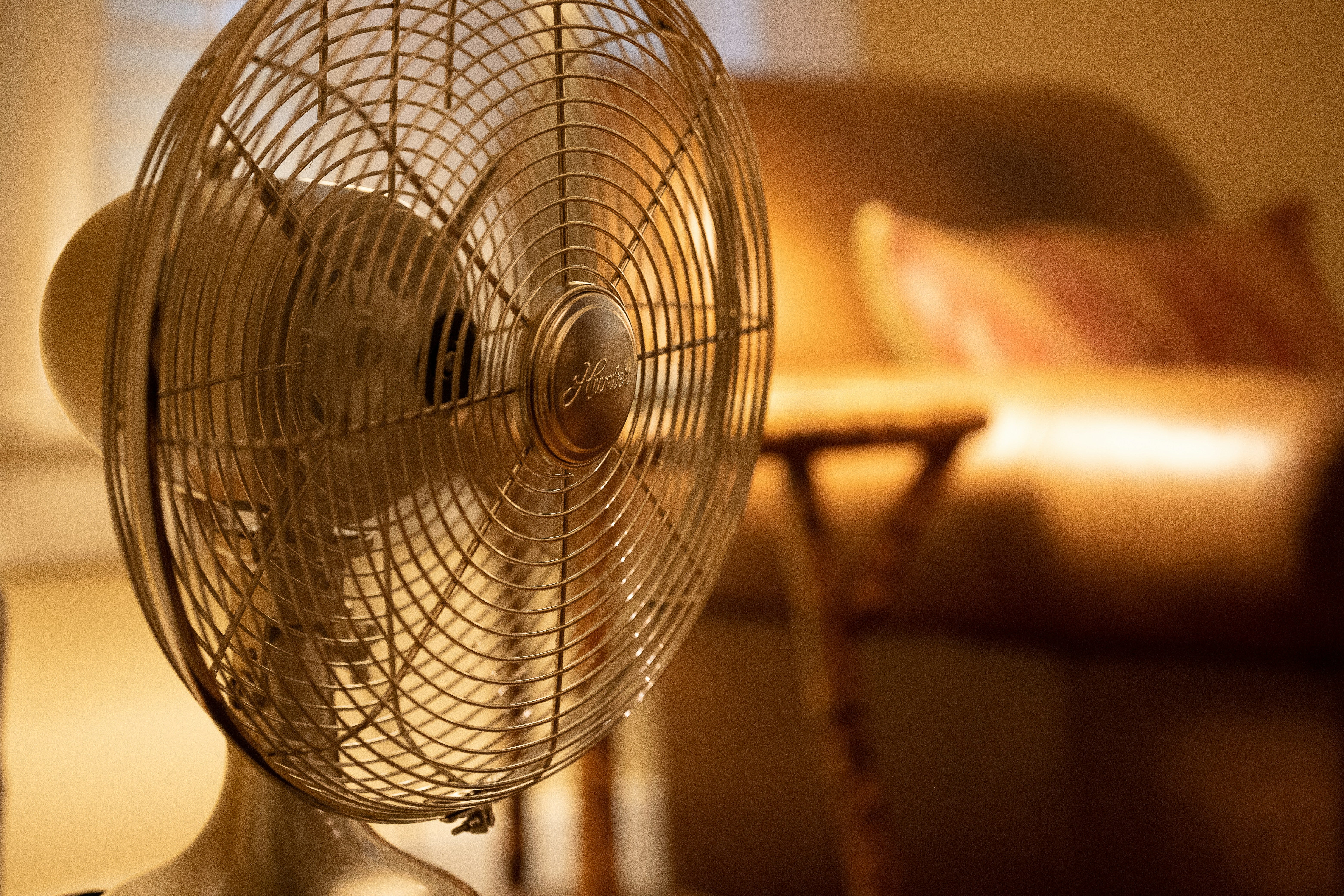
Many homes in Europe are designed to trap heat instead of withstand it. Homeowners can change this by sealing windows, adding ceiling fans, and blocking daytime heat with coverings or curtains.
Cities can also add more greener spaces to combat urban heat islands and adjust building codes to encourage more ventilation and airflow. In places like Dubai, the government redirects waste heat to cooling plants outside of the city. And in Phoenix, the city operates 24-hour cooling centers.
Life’s hard enough with work, money, relationships, and the existential dread of living in 2026. The last thing we need is climate change keeping us up at night.
For ways to stay safe in the heat, check out these resources.